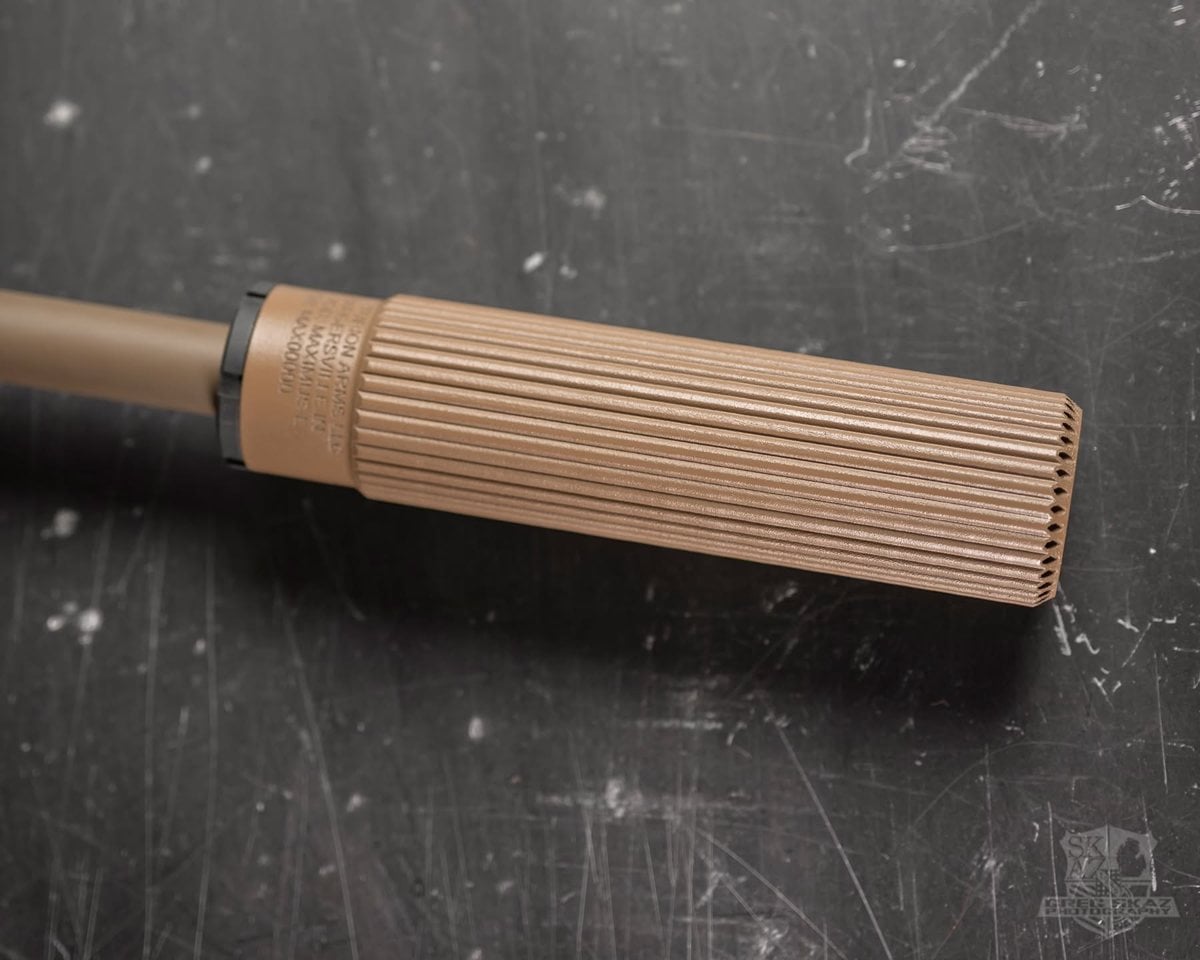
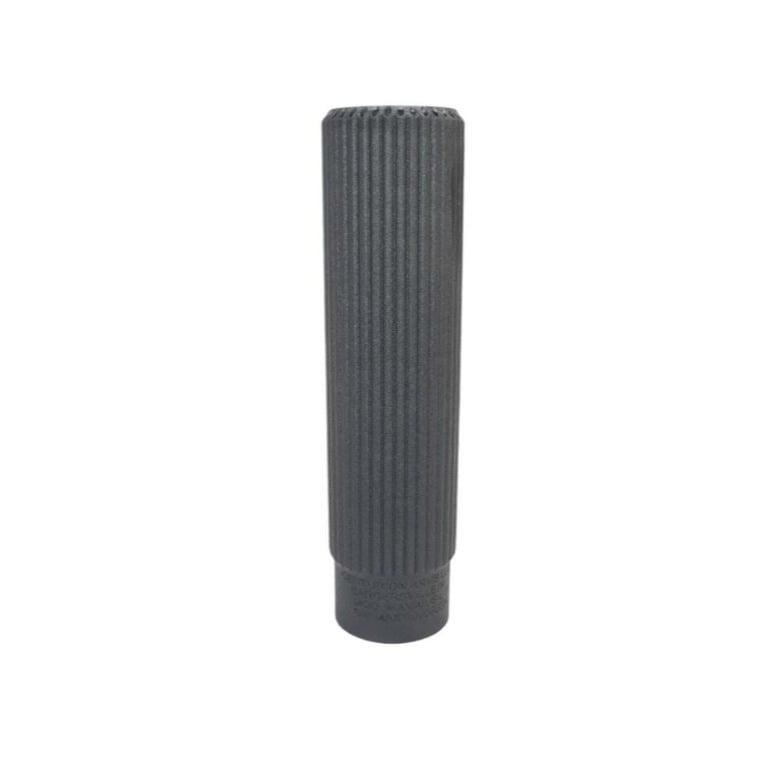
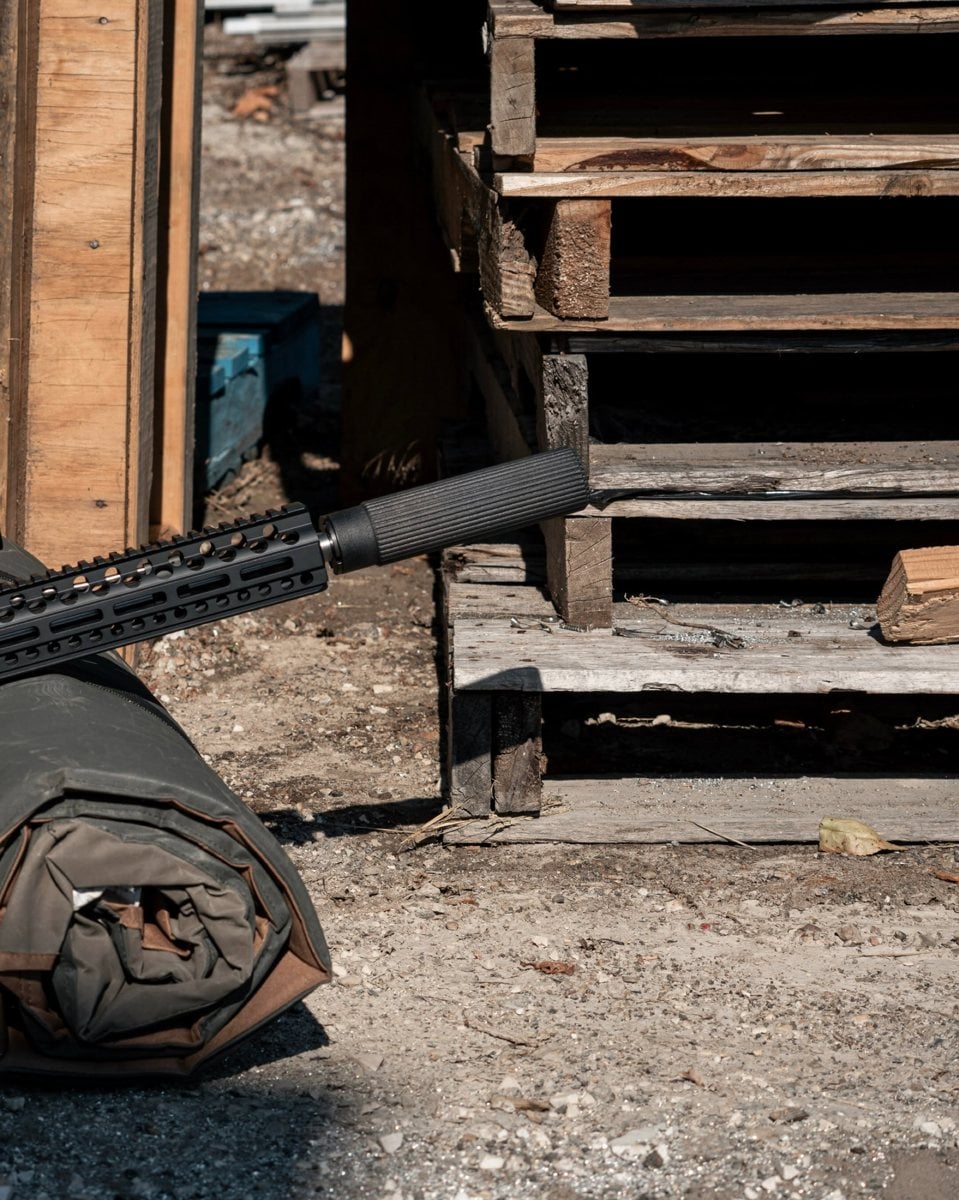
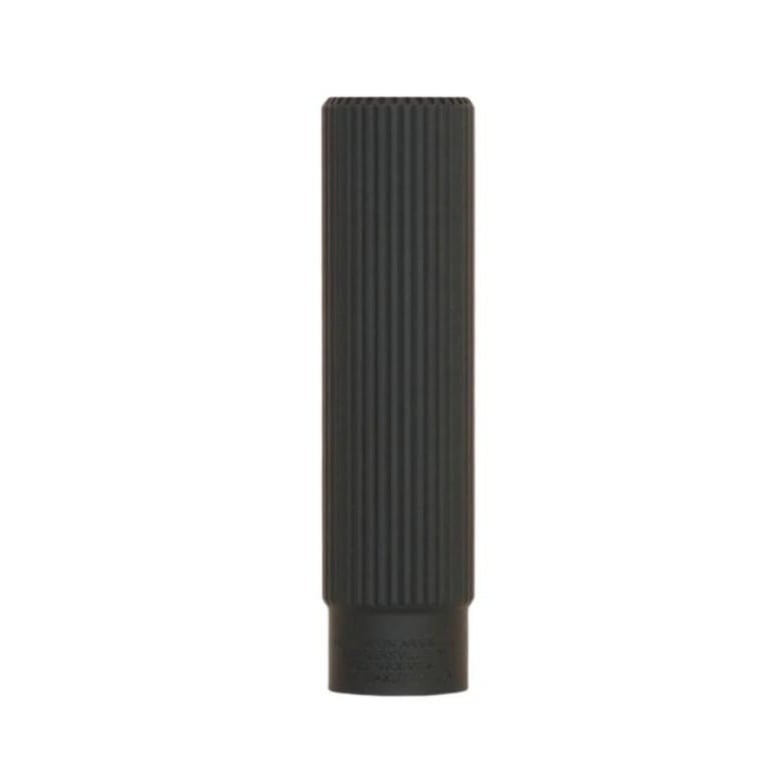
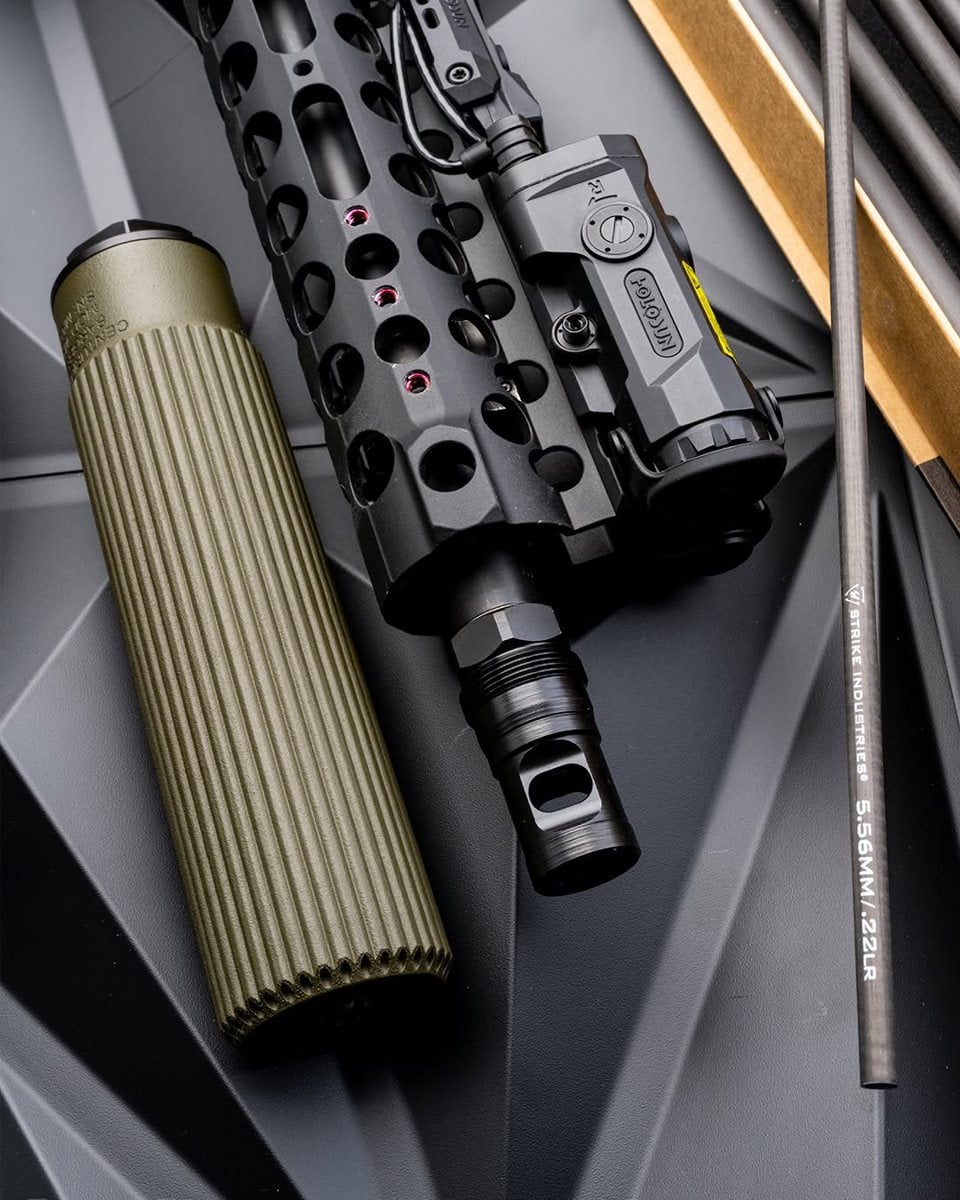
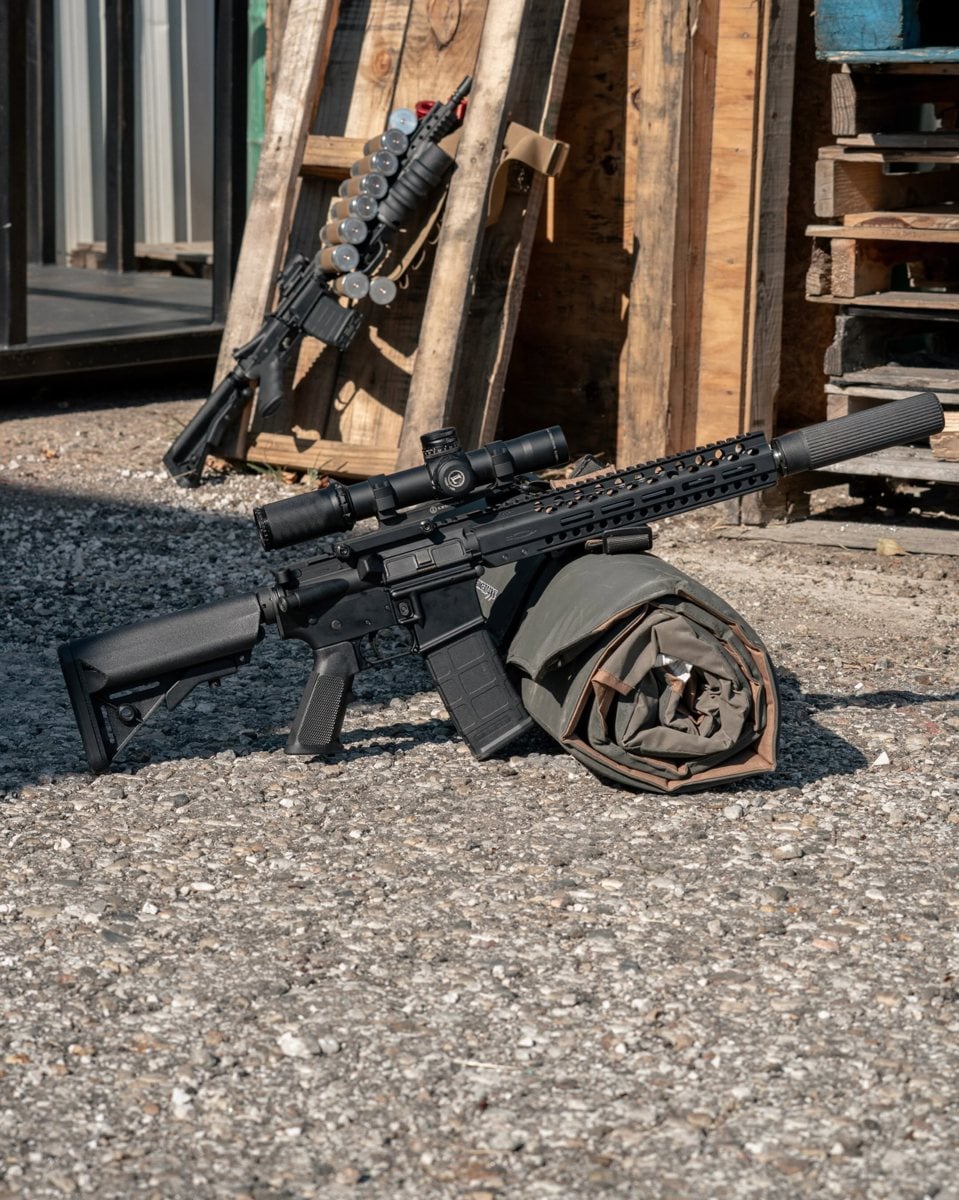
A Centurion Arms suppressor is a newer product from a company known for hammer-forged barrels, MK12 builds, and hard-use rifles. Monty LeClair, the retired Navy SEAL who owns Centurion Arms, designed the Maximus line around problems he saw with suppressed rifles for years. He wanted a suppressed AR to run the way it does unsuppressed, only quieter and with far less gas in the shooter’s face.
advertisement
The lead model is the Maximus-L in Inconel, a 5.56 duty can. PEW Science tested it on a 10.3-inch MK18 with Federal XM193 in March 2025. It earned a composite Suppression Rating of 40.3, which PEW listed as the third highest overall in its rankings at the time. Its muzzle Suppression Rating of 39.8 placed it in PEW’s top five for bystander protection, and its shooter’s ear rating was 28.5. PEW ran the test with a Rearden titanium direct-thread mount on the can. Monty said PEW’s results showed “we were the number one rated duty grade can in Inconel.”
Monty has used suppressors in the military and in civilian shooting, and he sees sound as one part of the job. “Sound is one piece of it,” he said. “But also flash is another piece of that as well. So basically just reducing your overall signature.” In his experience, early cans sped up bolt velocity and pushed extra gas back through the gun. That made a carbine less reliable and less pleasant to shoot.
Centurion started on a suppressor once 3D printing made the design practical. Printing produces internal geometry that cannot be machined in the traditional way. Monty said the first printed prototype worked surprisingly well, and the team refined vent sizes and pressure paths from there.
How the Centurion Arms Suppressor Handles Gas
Many makers market “flow through” designs, but Monty avoids that label for the Maximus. Some early flow-through cans, he said, reduced back pressure but were not very quiet. The Maximus uses a hybrid approach. “We have actually a standard baffle stack, so the sound is extremely good,” he explained, “and we’ve found a way to shunt the extra pressure that is created by the baffles.” That excess gas leaves the front of the can instead of coming back at the shooter.
Centurion’s product pages list minimal change to bolt velocity and ejection angle, less blowback, and fewer fumes in the shooter’s face. “It’s super pleasant to shoot. You don’t hardly get anything back,” Monty said. The rifle also stays cleaner because less carbon is driven back into the action. On reliability, he said, “It doesn’t speed up bolt velocity, so it doesn’t have any effect on the reliability of the gun.”
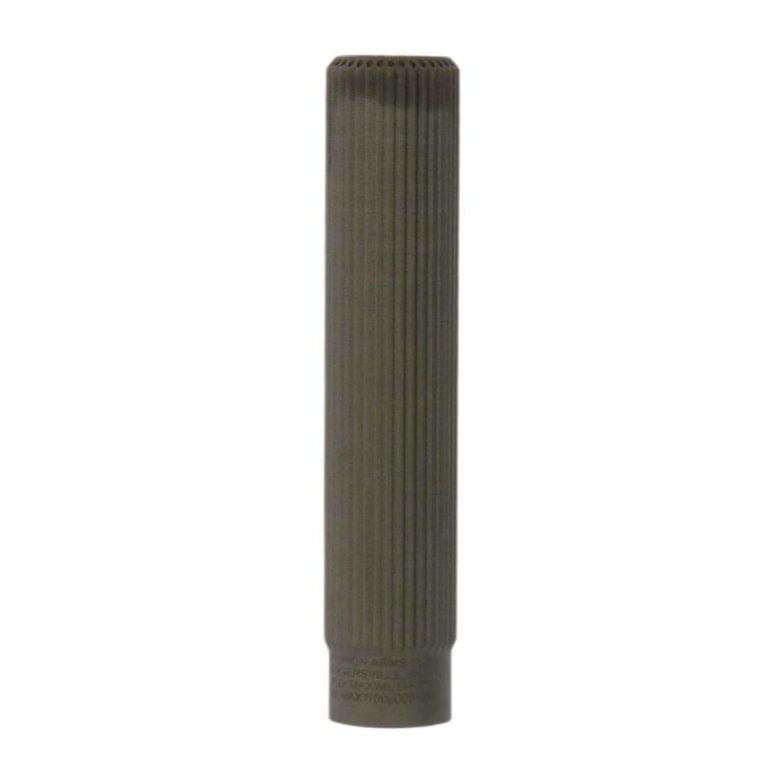
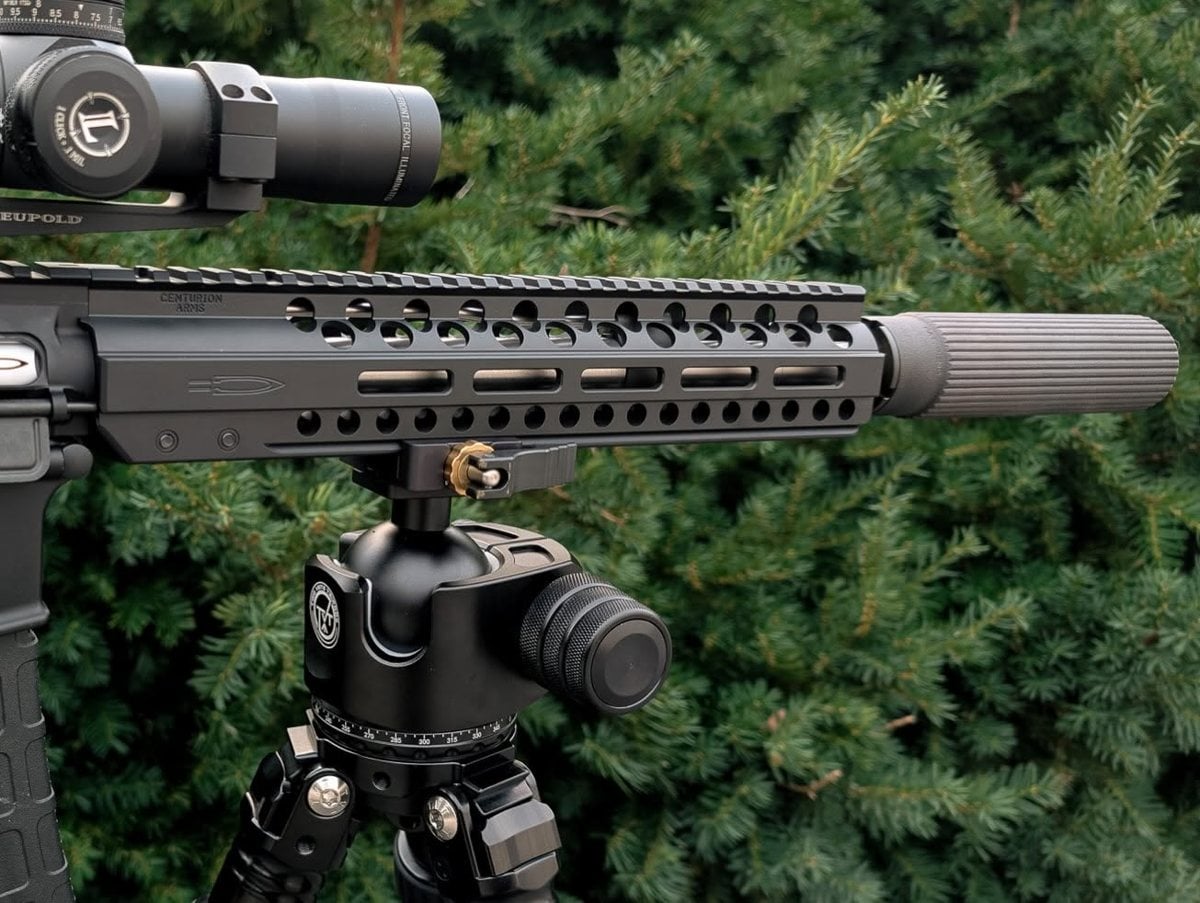
Monty built the Inconel Maximus-L for the hardest use. This Centurion Arms suppressor is 3D-printed from aerospace-grade Inconel, weighs 14 ounces, and wears C-series Cerakote in Armor Black, Coyote, or OD Green. It is 6.25 inches long and 1.625 inches in diameter with a 1.4-inch blast baffle. It covers .17 through .223, is rated for full-auto use, and Centurion lists 34 dB of sound reduction. Monty noted that jet engines use Inconel for its stability at extreme heat.
Centurion Maximus-L 5.56 Inconel Suppressor – Black
$1,250.00 at AR15Discounts.com Prices accurate at time of writing
He favors this version for sustained fire. “If I am going to continuously do a lot of full auto, a lot of heavy, hard use, then I would favor the Inconel,” he said. Monty also said the competing titanium cans in the PEW comparison weighed about 11.5 to 12 ounces. By his numbers, the Inconel Maximus-L carries only a few extra ounces while using a far tougher alloy.
The Lighter Maximus-L-Ti
The Maximus-L-Ti uses the same dimensions in 3D-printed titanium with a DLC finish and weighs 7.3 ounces. For competition strings of 30 or 40 rounds with time to cool, Monty considers titanium perfectly adequate. For hunters, he sees no reason to pick anything else.
For 7.62 rifles, the Maximus-H-Ti carries the same Centurion Arms suppressor design to a heavier host. It is 3D-printed titanium with a DLC finish, 8 inches long, and 1.625 inches in diameter. It has a 2.9-inch blast baffle and weighs 9.9 ounces. Centurion lists the same 34 dB sound reduction. When we called the Maximus the general-purpose choice in 5.56 or .30 caliber, Monty agreed without hesitation.
Centurion Maximus-H-Ti 30 Cal Titanium Suppressor, DLC Coated OD, S-Line Coated ID
$1,350.00 at AR15Discounts.com Prices accurate at time of writing
Every Centurion Arms suppressor in the Maximus line uses the industry-standard 1-3/8×24 HUB rear thread. A shooter can run a direct-thread mount or a flash hider and quick-detach mount from almost any HUB-compatible maker, and Centurion now offers its own HUB mount too. Monty also said testing showed minimal point-of-impact shift with and without the can attached.
Centurion ran the Inconel Maximus-L through SOCOM-style firing schedules. Monty described them as a mix of paced semi-auto strings, bursts, and full-auto magazine dumps. Centurion’s Inconel Maximus-L page says the can consistently passes 10 of those firing tables, and Monty said the Cerakote held up as well.
Centurion designs most of its products, the Maximus included, around what Monty would carry himself. “I want stuff that’s going to be durable,” he said. “I want stuff that I feel I would feel comfortable with putting my life on the line with.” He bases that standard on years of using suppressed rifles overseas as a Navy SEAL.
Buying a Centurion Arms Suppressor in 2026
Federal suppressor rules changed this year. The One Big Beautiful Bill Act cut the NFA tax on suppressors from $200 to $0 starting January 1, 2026. On August 5, 2026, a federal court in Texas ruled in Silencer Shop Foundation v. ATF that registration and approval requirements could no longer be enforced for $0 tax items, but the injunction covered only the plaintiffs. On October 9, 2026, ATF issued an open letter extending that policy to everyone. ATF no longer requires approval or registration to make or transfer a suppressor. A buyer now fills out a Form 4473 and passes a NICS check at a dealer in the buyer’s home state, the same as for any other firearm. Prohibited persons still cannot buy one, and a dealer still cannot transfer a Centurion Arms suppressor in violation of state or local law. Dealers and manufacturers still pay the special occupational tax, and ATF still accepts Form 4s from buyers who want to register voluntarily.
State law still applies. In states that tie legal suppressor ownership to federal registration, a voluntary Form 4 may be the safer route, so ask your dealer or local law enforcement. Centurion does not sell or ship the Maximus to California, Delaware, Hawaii, Illinois, Massachusetts, New Jersey, New York, Rhode Island, or Washington, D.C. Check your local rules before you order a Centurion Arms suppressor.
Start with the Inconel Maximus-L for a 5.56 rifle that will see sustained fire. Pick the Maximus-L-Ti for the lightest 5.56 setup and the Maximus-H-Ti for 7.62 hosts. Compare all three on their AR15Discounts product pages and confirm your state’s rules before you order a Centurion Arms suppressor.
FAQ
Is a Centurion Arms suppressor flow through?
Monty calls the Maximus a reduced back pressure can rather than a flow-through design. It uses a standard baffle stack for sound and redirects excess pressure forward out of the can to keep back pressure low.
Should I choose titanium or Inconel for my Centurion Arms suppressor?
Choose titanium for light weight, hunting, and typical carbine use. Choose Inconel for sustained full-auto or very heavy fire, since Centurion rates the Inconel Maximus-L for full-auto use.
What mount does the Maximus use?
Every Centurion Arms suppressor in the Maximus line uses a 1-3/8×24 HUB rear thread. It works with Centurion’s HUB mount and with direct-thread and quick-detach mounts from other HUB-compatible makers.
Do I still need a Form 4 to buy a Centurion Arms suppressor?
Not under federal rules. As of October 9, 2026, ATF no longer requires a Form 4, prior approval, or registration for suppressors. The transfer runs on a Form 4473 and a NICS check at a dealer in your home state. Some states tie legal ownership to federal registration, and ATF still accepts voluntary Form 4s, so confirm your local rules before ordering.
Did you find this article useful?
Let the author know with a 5 star rating!
Average rating 5 / 5. Vote count: 1
No votes so far! Your rating will help us continue to provide valuable and interesting content.
Since you found this post useful...
Follow us on social for first dibs on brand new content!
We are sorry that this post was not useful for you!
Let us improve this post!
Tell us how we can improve this post?
Related Posts:
PEW Science & What to Know Before Buying a Suppressor We recently sat down with Jay from PEW Science to discuss his attempt to push the suppressor industry forward, and what we should consider before purchasing a suppressor for our…
Breek Arms Sledgehammer Omni-Buster: Gas Mitigation… We recently spoke with Breek Arms about the company's Sledgehammer AR-15 Gas Blocking Charging Handle and its LE Latch counterpart, both designed around a problem that has become increasingly familiar…
Riflespeed Gas Controls - An ARBuildJunkie Q&A We recently sat down with Kyle Lynch of Riflespeed to discuss his approach to the adjustable AR gas system, called the Riflespeed Gas Control system. We discuss how the idea…
V Seven Weapons Systems - A Cure for the Common AR? V Seven Weapons Systems is building high-quality, extremely lightweight ARs using a variety of uncommon materials including titanium, magnesium and lithium aluminum. In recent months we've heard a lot of…
AR-15 Precision Long Range Shooting Basics AR-15 Precision Long Range Shooting? We reached out to the man who literally wrote the book on the subject, former Army Ranger sniper team leader Ryan Cleckner. His book, is…
Sprinco Springs for a Better Performing AR-15 Why Choose Sprinco springs for your AR-15? To find out, Last fall, we chat with Alan Dugger of Tactical Springs LLC/Sprinco USA. Dugger discusses his early involvement with firearms, the…
Subscribe
0 Comments
Most Voted
NewestOldest
If you want to be among the first to know when we release new content, your best bet is to sign up via email:
We’ll keep the emails to a minimum and we will never sell or give your information to a third party.